
Sensor-agnostic & Universal
Processes sensor signals regardless of type, quantity, or source. Combines multiple channels into a common system condition and transmits detected condition changes in real time to PLC, SCADA, or MES systems.
Condition Monitoring detects signals. SF2 understands system conditions.
100% local processing. Zero cloud.No data science knowledge required.
What SF2 Systems stands for
SF2 Systems offers a comprehensive ecosystem of hardware and software for predictive maintenance, anomaly detection, and root cause analysis – based on the deterministic SF2 AI (Semantic Folding Sensor Fusion). This transforms sensor and time-series data from machines, equipment, and processes into digital condition representations: semantic fingerprints.
Analyze industrial sensor data locally and build reproducible models for condition monitoring, anomaly detection, and predictive maintenance — without cloud infrastructure or a dedicated data science team.
Key benefits
Processes sensor signals regardless of type, quantity, or source. Combines multiple channels into a common system condition and transmits detected condition changes in real time to PLC, SCADA, or MES systems.
Replaces resource-heavy matrix calculations with fast, binary overlap operations. Delivers sub-millisecond response times using minimal computing power.
Performs analysis and inference entirely on-site. Sensitive production data remains within your own network; even isolated and cloud-free operating environments are supported.
Deployment & Scaling
The modular SF2 ecosystem accompanies you from the initial data exploration to automated 24/7 operation at the machine.
Phase 1
Evaluate local CSV data and validate models on your workstation.
Phase 2
Suite RT manages and distributes models; Engine RT runs them in production.
SF2 Ecosystem
Software for local data analysis, creation and management of condition models, as well as their production deployment.
The free SF2 Suite SE enables engineers to analyze existing sensor logs directly on their own workstation. CSV files are processed locally; sensitive data does not leave the company.
SF2 Suite RT supports the management, deployment, and monitoring of models for machines, plants, and distributed industrial systems.
The compact runtime module executes previously created models autonomously and detects condition changes in real time - as a container, native application, or integrated into an SF2 Edge Device.
Optional hardware as an enabler for integration and edge operation. SF2 can also be used on existing, suitable infrastructure.
The compact DIN-rail controller connects industrial data interfaces with the local execution of an SF2 Engine RT.
The mobile diagnostic tool supports commissioning, data inspection, and model validation directly in the field.
Semantic Folding Sensor Fusion explained
SF2 converts the current combination of relevant sensor signals into a semantic fingerprint. Similar states generate similar fingerprints; through direct overlap, it becomes measurable how closely a current condition matches a known normal, transitional, or fault state.
Semantic fingerprints are 2-dimensional binary vectors with sparse filling. They are square in any size (32x32, 64x64, 128x128, 256x256).
Each state of the system results in a representative fingerprint. Similar states have similar fingerprints. The similarity of two fingerprints is measured by direct overlap.
The second detail shot shows a Center-of-Gravity (CoG) rendering of the current condition fingerprint. The CoG indicates where the semantic center of the current condition lies.
This focus can overlap with that of an error fingerprint without an error already being present. This means a high contextual similarity to this error pattern: If an error were to occur at this moment, this error image would be the most likely.
Displays real-time raw sensor channels without preprocessing. Preserving the original signal character makes dynamics, sudden spikes, and drift patterns immediately visible before normalization.
This view is the technical reference before normalization, binning, and mapping. It helps to correctly classify the later semantic modeling and clearly distinguish which structures come from the raw data and which are only highlighted through preprocessing.
This detail shot shows the fully processed sensor inputs after the UDTAT input processing pipeline. From the raw channels, stable, comparable signal patterns are created as a reliable basis for further semantic evaluation.
The channels have already been consistently transformed and coordinated with each other. This makes patterns and state transitions easier to recognize and, in the next step, more robust to transfer into semantic fingerprints.
This detail shot shows the actual output of the SF2 system. The topmost channel originates as the only one from the input data and serves as a reference. During condition changes, a reference fingerprint can be marked, named, and stored in the fingerprint database.
The remaining channels are overlap channels. The baseline channel compares the current status with the five previous aggregated states and is typically close to 100% during normal operation. The failure channels show the overlap with the respective error fingerprints. Based on this, alarm thresholds can be defined, for example, a trigger at 50% overlap with an error fingerprint.
Processing Pipeline
Available sensor and process data are taken as unaltered input.
The input processing pipeline transforms raw signals into stable, comparable Signal traces.
The data is transferred into sparsely populated binary fingerprints.
The current fingerprint is continuously compared with stored reference conditions.
Increasing similarity with critical references makes approaches visible early.
Implementation roadmap
Download SF2 Suite SE and analyze existing sensor logs.
Read raw data with UDTAT, select relevant channels, and transform signal representations.
Generate semantic fingerprints for normal operations, state transitions, and known fault conditions.
Check historical trends, confirm reference conditions, and define trigger logics.
Deploy the validated model as SF2 Engine RT on server, edge device, or SF2 Edge Device.
Case Studies
SF2 has been tested with demanding data from production, energy, infrastructure, mechanical engineering, radar, and IT operations.
Next Step
With the free SF2 Suite SE, you can fully analyze existing sensor logs locally – no cloud, no data transfer, and no extensive data science project required.
 Predictive maintenance for water pumps
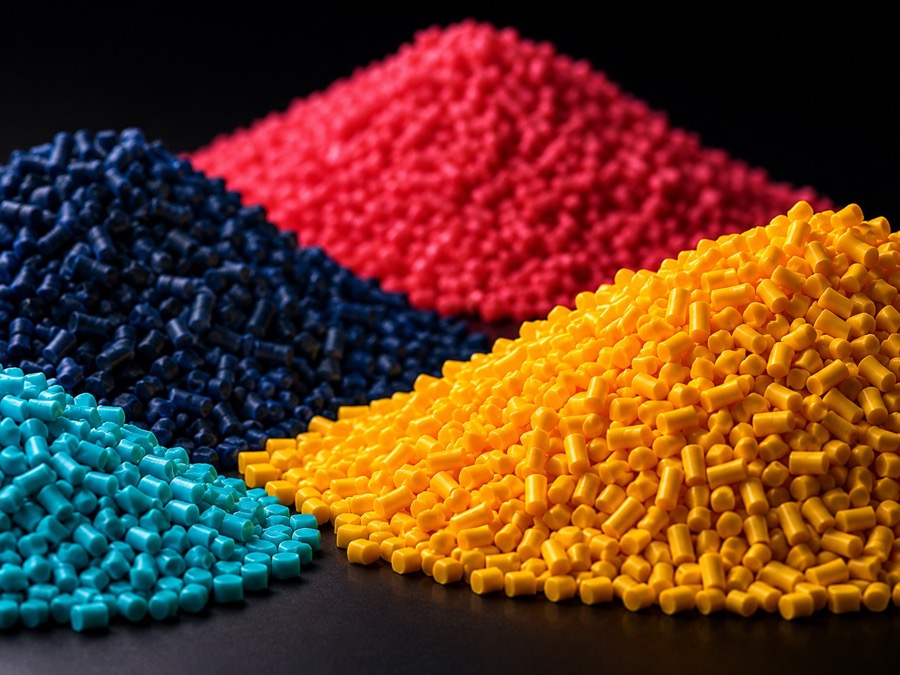 Condition classification in Polymer Extrusion
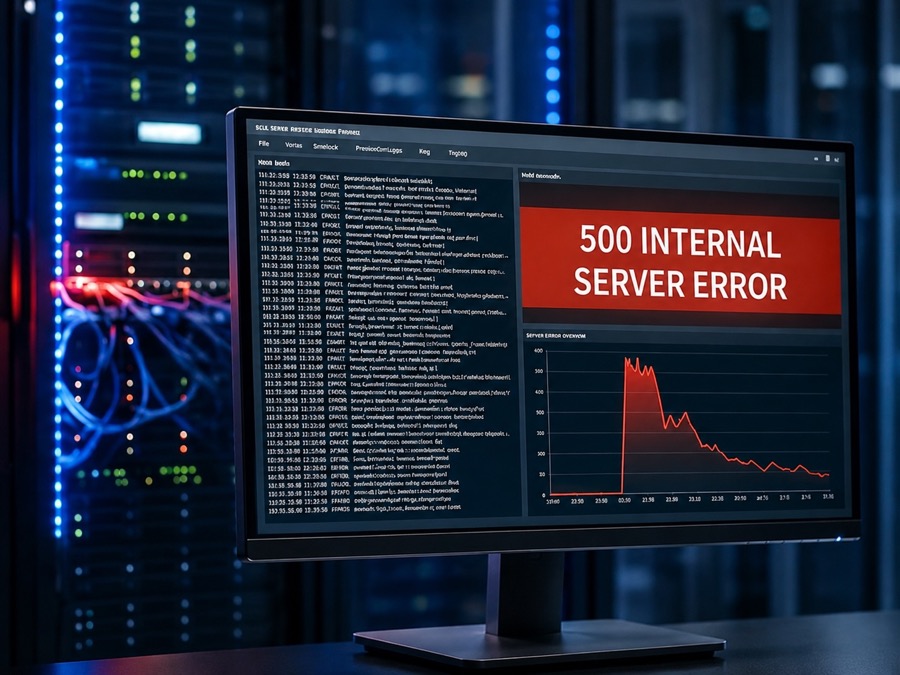 Early warning of 5xx server events
 Semantic radar target recognition
 Hydrate Detection in Deepwater Production